

Colorado homeowners must be aware of the risks associated with frozen or burst water pipes when winter hits. Pipes in your own house may rupture due to natural pressures that cause water distribution mains to break during cold weather in Colorado.
Our team of professionals wants to provide you with all the knowledge you want to comprehend this frequent problem, take the appropriate safety measures to prevent frozen pipes, and know what to do in the event that a pipe bursts.
In this blog, we will talk about ways to prevent costly and wasteful water leaks during winter.
How Do Pipes Freeze in Colorado Winters?
Because water expands as it freezes, the additional pressure can cause frozen pipes to break. Uninsulated water pipes found along exterior walls, in attics, basements, crawl spaces, and kitchen cabinets are the most vulnerable in your Colorado house.
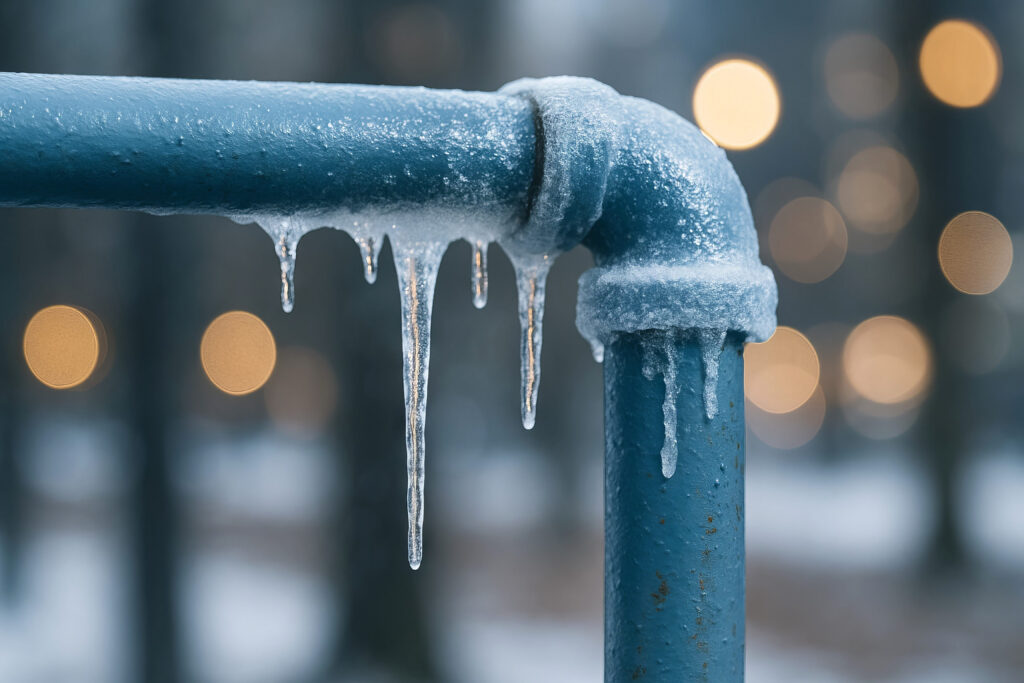
Tips To Avoid Frozen Pipes In Colorado
If left undrained before winter arrives, outdoor water pipes, such as those that connect swimming pools, sprinkler systems, irrigation systems, and outdoor hoses, are also vulnerable.
Your water pipes are more likely to have serious issues and damage from frozen water the older they are. Furthermore, a burst pipe could result in catastrophic damage because many contemporary homes have intricate plumbing systems.
One ruptured pipe can release up to four to eight gallons of water every minute, resulting in damage worth thousands of dollars in less than an hour. This might leave your house or place of business unusable for weeks.
If you already have frozen pipes, you must check out our Commercial Plumbing Services.
Warning Indicators of Frozen Pipes
Frozen pipes can still happen even with measures. As a homeowner, be on the lookout for several common indicators that your water pipe may be frozen.
- You might have frozen water anywhere in your system if your water flow is noticeably reduced or stopped at a specific fixture.
- Sometimes a frozen pipe will leak before a full-blown burst happens.
- A burst freezing pipe can be identified by looking for wet areas on your ceiling or walls.
How to Avoid Getting Pipes Frozen in Colorado Winters
You may significantly lower the risk of frozen or burst water pipes by implementing a few easy preventative measures before winter arrives. Be mindful of the following safety measures:
Prior To The Arrival Of Cold Weather
Find out where the water shut-off valve is located in your house. If a pipe breaks, you’ll need to shut off the water to your house to minimize damage. In most single-family homes, the valve is in the basement or crawl space, on a wall facing the street.
Ensure that everyone in your home understands how to turn off the water. Water pipes that could be exposed to the cold, such as those in unheated basements and along exterior walls, should be insulated.
During A Deep Freeze
- Allow household air to warm exposed pipes, such as sink access doors, and keep cabinet doors open.
- Keep the doors to your attached garage closed. This unheated area is sometimes used for plumbing, making it susceptible to the harshest winters.
- The faucet that is the furthest away from the source of your water supply should be cracked. Pipes are less likely to freeze when water molecules are kept flowing by a very slow trickle. To preserve water for other household applications, place a bucket underneath the faucet.
- When you leave your home or place of work for a few days, keep your thermostat set higher than 65 degrees.
Don’t Wait For Nature To Do Its Thing If You Believe A Pipe Has Frozen:
- As soon as you can, thaw the pipe or get assistance from a plumber.
- Turn off the water or check the shut-off valve if you thaw it yourself. When the pipe thaws, you don’t want water to suddenly shoot out of it.
- Slower thawing is preferable. Overheating pipes might cause them to break. It is appropriate to use a hair dryer aimed at the frozen portion of the pipe. It’s not a blowtorch.
Other Useful Tips for Preventing Frozen Pipes
- Any exposed water lines that could freeze should be insulated.
- To cut down on energy and heat loss, insulate the tank of your hot water heater.
- Understand how to use your home’s main shutoff and where it is located.
- If there are water lines in your garage, keep the door closed.
- Open the cabinets in your kitchen and bathroom to let warm air travel around the pipes on really cold days.
- Particularly during the night when it’s colder, let a tiny trickle of room temperature water stream from the faucets.
How To Fix Frozen Pipes
You can attempt these methods to get water flowing freely if you think one of your pipes is frozen.
- To avoid a frozen pipe, keep the faucet open. Water will flow once more when the frozen portion begins to melt, assisting in the melting of the pipe’s remaining ice.
- To assist in thawing the pipes, you can also wrap hot water-soaked towels around them.
- A location with a potentially frozen pipe could be warmed with a space heater, hair dryer, or heating pad.
- Take precautions against electrical fires and exercise extreme caution while using electrical devices close to water sources. A qualified plumber should handle frozen pipes close to electrical outlets.
How To Handle A Pipe Burst
In order to limit damage, you should act fast if you discover that a water pipe has actually burst.
- First, turn off your home’s water supply. Before an emergency arises, you should be aware of the location of this valve.
- Put your belongings out of danger and turn off any electric appliances that are close to the flood flow. To capture and gather as much water as you can, utilize buckets.
- Use functional drains in your kitchen and bathroom fixtures to remove additional water from your plumbing system.
- Contact a professional to fix your pipes once the immediate issue has been resolved. Before contacting your insurance provider, make sure to take photos and document any damages.
FAQs
1. How should I prepare my sprinkler system and swimming pool for freezing weather?
Drain the water from your sprinkler pipes and swimming pool according to the manufacturer’s instructions.
2. What should I do with outdoor hoses before winter?
All outdoor hoses should be disconnected and drained. To allow any leftover water to drain, cut off the water supply to these hoses and leave the external valve open. Think about covering spigots with an insulator.
3. What should I do with my water system if I will be away for an extended period?
Drain the water system by cutting off the water supply and running all fixtures until no more water flows if you will be out of town for a long time.
4. What temperature should I keep my home at to prevent freezing pipes?
The temperature you should keep your home at to prevent freezing pipes is at least 55 degrees.
5. What costs are involved in fixing a busted water pipe in Colorado?
In Colorado, repairing a busted water pipe can be a significant unexpected expense. You will need to factor in the cost of a plumber to fix the pipe itself, plus the added expense of repairing any resulting water damage to your property.


