

Ten minutes for the shower to empty. A kitchen sink that gurgles like it’s got an opinion. And that smell. The one you keep noticing and keep pretending you don’t. Then comes the move everybody makes: reach under the sink, grab the bottle, pour, pray. Nine times out of ten? Wrong call entirely.
Real drain cleaning goes after the blockage itself instead of papering over it for a week. So here’s how to tell when you actually need it in Colorado Springs, and what a genuine pro does that a bottle simply can’t.
Reading the Signs and the Cause
Two things are worth sorting out before any drain cleaning starts. What your drains are trying to tell you, and what’s physically sitting down there causing it. Skip either one and you’re just guessing expensively.
What Your Drains Are Telling You
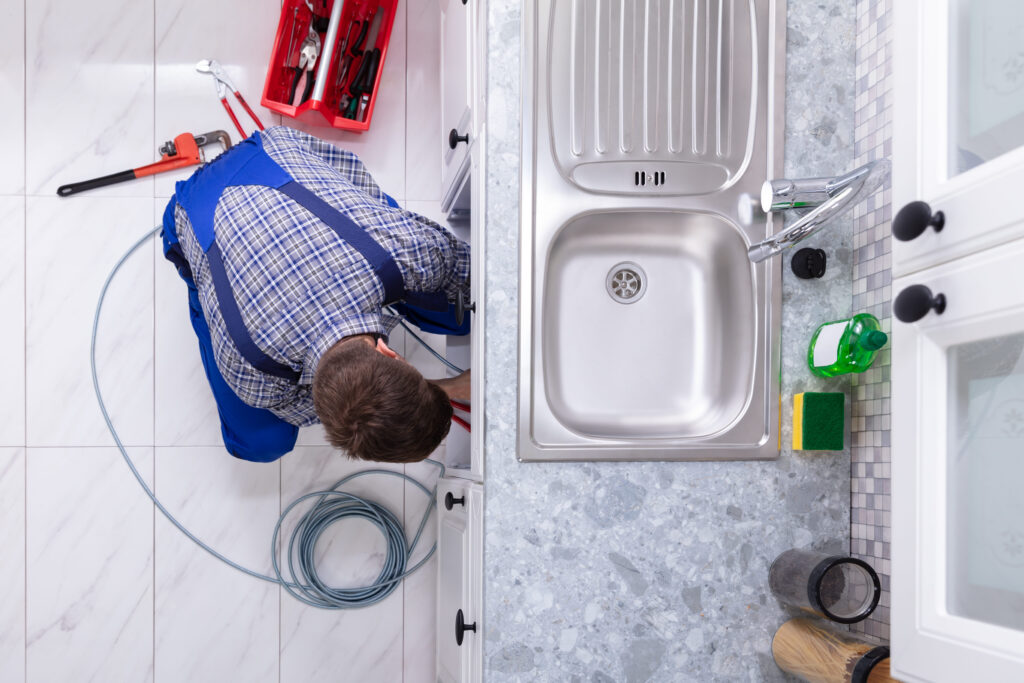
Get Your Drain Cleaned Professionally by Us!
Drains rarely die suddenly. They complain first, usually for weeks, and almost everybody tunes it out until there’s water spreading across the floor. Listen for these:
- Sinks, tubs, or showers draining slowly, and getting slower every week.
- Gurgling from a drain or toilet whenever water runs somewhere else.
- Foul odors are seeping up from the drain, especially in the kitchen.
- Water backing up into a fixture instead of politely going down.
- Several fixtures are misbehaving all at once.
That last one is the big tell. One slow drain? Local clog, sitting right there in the trap or branch. Several at once? That’s your main line talking, and it’s a whole different animal.
What’s Actually Down There
Here’s the good news. The clog is rarely a mystery. A short list of offenders causes nearly all of them, and figuring out which one you’ve got changes everything about the fix.
The Usual Suspects
Not glamorous. Just true:
- Hair and soap scum, the timeless bathroom duo.
- Fats, oils, and grease cool and harden into a waxy coating.
- Wipes, yes, even the ones stamped flushable, which don’t break down.
- Food scraps and coffee grounds are worse with a garbage disposal.
- Mineral scale, and Colorado water runs genuinely hard.
- Tree roots, sniffing out a sewer seam and moving right in.
The EPA flat-out names grease and products marked flushable among the materials that block sewer lines. Only toilet paper belongs in a toilet. Everything else is a clog with a future date.
Why the Chemical Bottle Backfires
Store-bought cleaners are caustic, and caustic cuts both ways. They chew on older pipes. Worse, they usually melt a narrow channel straight through a clog rather than clearing it, so water flows for three days and then quits again, smug as ever. They’re rough on skin and eyes, too, and mixing products can produce genuinely dangerous fumes, so never combine them. And when the bottle fails? Your plumber shows up to a pipe full of standing caustic liquid. Chemicals chase the symptom. Drain cleaning kills the cause.
Getting It Actually Fixed
Diagnosis first, always. That’s where real drain cleaning sets itself apart. That’s the entire difference between a repair that holds for years and one that has you dialing again before the next billing cycle closes.
What a Pro Really Does
Three tools carry the job: cabling, or snaking, which mechanically shreds the clog and drags it out. Hydro jetting, blasting high-pressure water to scour the pipe walls, truly cleans. And the camera, which shows what’s actually happening instead of somebody’s best theory.
That camera earns its keep every time. Roots, a grease layer, and a cracked or bellied pipe all cause a slow drain, and each requires a completely different repair. Guess wrong, call again next month. Businesses hit the same wall at a larger scale, which is exactly why commercial drain cleaning operates on the same logic.
Then keep it clear, because that part’s easy: strainers in every drain. Grease into a can, let it set, then into the trash. Toilet paper only. Clogging over and over? Ask about scheduled maintenance instead of waiting for the next backup. Stubborn drain right now? Contact Bear Creek Plumbing for residential plumbing service and a free estimate.
Frequently Asked Questions
Are chemical drain cleaners really that bad?
They can be, yeah. Most of them are caustic, and that harshness slowly gnaws at older or already tired pipes over time. They also tend to bore one narrow channel through a clog rather than actually removing it, so the drain runs fine for a few days and then quits on you all over again, right back where you started. Add that they’re genuinely rough on skin and eyes, and that mixing different products can throw dangerous fumes, so never combine them. A proper mechanical clearing hauls the blockage out instead of half dissolving it and leaving the rest parked in your pipe.
How do I know it’s the main sewer line?
Count your fixtures. That’s the tell. One slow bathroom sink is almost always just a local clog right there in the trap or the branch line. But when several back up together, or the toilet gurgles the second the washing machine drains, that pattern points straight to the main. And sewage pushing up into a tub or floor drain? Call a plumber immediately. That’s a plumbing problem and a real health concern at the same time, not something to ride out over a long weekend.
What’s hydro jetting, and do I need it?
It’s high-pressure water, scouring the pipe’s inner walls and stripping out grease, sludge, and years of buildup, rather than merely poking a hole in the middle. Brilliant on grease-heavy kitchen lines and on older pipes carrying years of quiet accumulation. But it isn’t right for every job, because pipe age and condition genuinely matter here. Running a camera down there first tells the plumber whether jetting genuinely suits your line, or whether something gentler makes far more sense.
How often do drains need cleaning?
No universal schedule exists, honestly. It rides on your household, your pipes, and what you send down them. Plenty of people never need it at all until something finally clogs up. But if you’re plunging on the regular, fighting slow drains that keep returning, or you’ve got known root intrusion, scheduled maintenance beats waiting for a backup every single time. A plumber can inspect your system, assess its condition, and recommend a realistic interval for your home. Contact Us for a free estimate.


