

Shower’s a sad little drizzle. The pot takes five minutes to fill. Sound familiar? Low water pressure is annoying way before it’s ever an emergency, and honestly, the cause could be anything: a crusty aerator, a valve that’s giving up, something in between. So you narrow it down. Here’s roughly how we’d do it if we were standing in your kitchen.
Is the low water pressure in one fixture or the whole house?
First question, always. Walk around and run a couple of faucets, a shower, the outside spigot if it’s not winter. One fixture acting up? Then the problem’s probably right there at that fixture. Everything weak? Then look upstream, closer to where water comes into the house.
Oh, and try hot and cold separately. Strong cold, weak hot is its own thing. More on that below.
Does Your Home Have Low Water Pressure?
What causes low pressure at a single faucet or shower?
Usually it’s mineral buildup. Plenty of water around here carries minerals. Woodland Park, for example, reports water hardness between 60 and 110 milligrams per liter, which is about 3.5 to 6.4 grains per gallon. Those minerals collect in the little screens and holes at the end of faucets and showerheads.
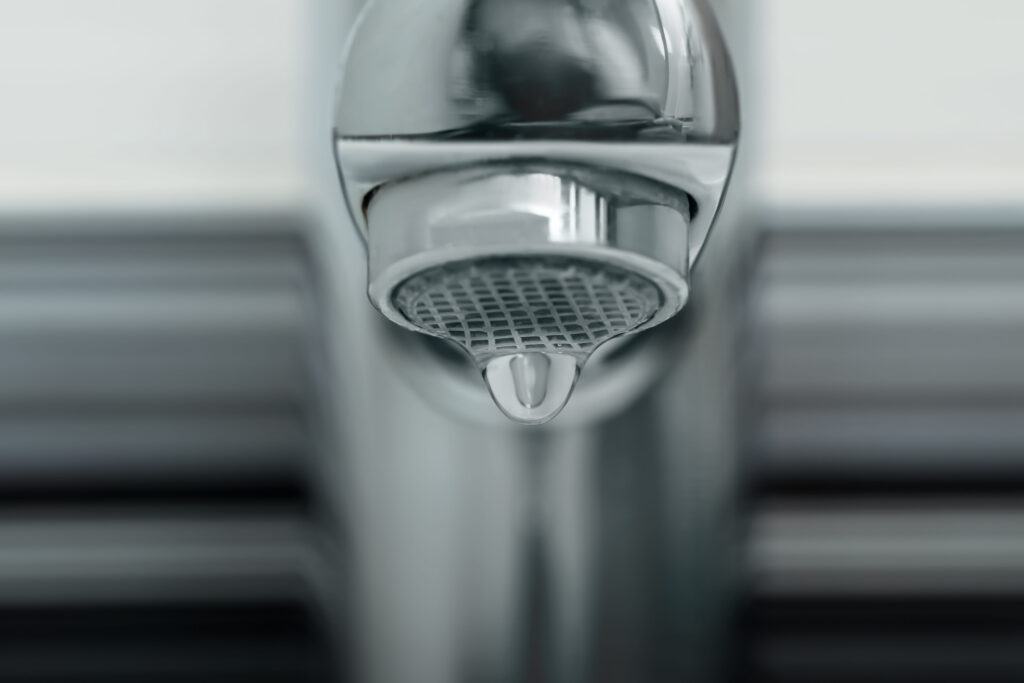
Easy fix, usually. Unscrew the aerator (that little cap on the faucet tip) or pull the showerhead and take a look. White or tan crust? Drop it in vinegar for a bit, scrub, rinse, and screw it back on. You’d be surprised how many “pressure problems” stop right there.
If cleaning doesn’t help, the cartridge or valve inside the faucet may be worn or clogged. That’s a repair, not a soak.
Why is my whole house suddenly getting low water pressure?
There are a few usual suspects. The first one sounds almost too dumb to mention, but check the main shutoff valve. Is it all the way open? If somebody shut the water off for a repair and didn’t open it fully again, the whole house gets choked down.
The second is the pressure reducing valve, or PRV, if your home has one. It usually sits near where the main line comes into the house. Its job is to keep the pressure coming in from the street at a safe level. When it starts failing, pressure can drop or swing high and low. The Lookout Mountain Water District, west of Denver, says a regulator should hold pressure at 50 to 60 psi, and that most regulators are adjustable. If yours won’t adjust or won’t hold steady, it’s due for repair or replacement.
Third, a leak. Water escaping somewhere in the system is water that isn’t reaching your faucets. Damp spots on walls or ceilings, a meter that keeps spinning when nothing’s on, or a water bill that jumped for no reason are all worth a call.
And sometimes it’s not you at all. If the neighbors are having the same trouble, call your water provider first. Main breaks and utility work can drop pressure for a whole street.
Can elevation affect water pressure in a Colorado home?
It can, and around here that’s not a small thing. Here’s the math, and it’s simple: water drops about 1 psi for every 2.31 feet it has to climb. So that bathroom two floors up? It was always going to run a little weaker than the kitchen. Built uphill from the water source? You start behind before anything’s even wrong.
No amount of vinegar fixes that. If the upstairs shower has been weak since the day you moved in, height might just be the answer, and what you need is a plumber looking at the setup, not a scrub brush.
On a well, it’s a different animal. Your pressure comes from your own pump and tank, not a city main. So when it drops, we usually start with the well equipment.
Why is only my hot water low pressure?
When the cold is fine and the hot is weak, look at the water heater. Sediment builds up in the bottom of tank heaters over time, and it can clog things up. We recommend flushing a tank water heater about once a year to clear that sediment out.
Rust-colored water, odd noises from the tank, or a leak at the base are signs the heater needs a closer look or replacing. Most tank water heaters last around 8 to 12 years.
What about old pipes?
Got an older house with galvanized steel pipe? That stuff rusts from the inside. Slowly. Over years, the opening gets narrower and narrower, and the pressure fades so gradually you barely notice until one day you do. Corroded pipe can start leaking, too. So if the house has some age on it and the pressure’s been sliding for a long time, it might not be a valve or a fixture at all. It might be the pipe.
Then there’s winter. A line that’s partly frozen can drop your pressure way down before it ever splits. Cold night, weak flow, faucet on an outside wall? Call. That one doesn’t wait.
When should you call a plumber about low water pressure?
Whole house is weak and the main valve’s wide open? That’s a call. Same if the PRV won’t hold steady, if you think something’s leaking, or if the hot side’s still weak after a flush. A pipe that might be frozen, don’t wait on it at all. And old corroded pipes aren’t a weekend project.
Aerators and showerheads, sure, handle those yourself. The valves, the heater, the pipes? That’s where we come in.
Frequently asked questions
What is normal water pressure for a house?
The Lookout Mountain Water District puts it at 50 to 60 psi, held there by the pressure regulator.
Can hard water cause low water pressure?
At a single faucet or shower, it sure can. The minerals clog the aerator or showerhead.
Why is my upstairs shower weaker than downstairs?
Gravity, mostly. Roughly 1 psi gone for every 2.31 feet of climb.
How often should I flush my water heater?
Once a year or so. Gets the sediment out.
Pressure problems in Woodland Park, Divide, Colorado Springs, or anywhere in Teller and El Paso County? Bear Creek Plumbing is owner-operated by master plumber Scott Swistock, with free estimates and military and senior discounts. Call 719-271-9617, or start with our Plumbing Repairs and Water Heaters pages. For related problems, read Water Hammer in Colorado Homes: What Causes Banging Pipes and How Do You Fix It?, How Do I Clear An Airlock In My Pipes? and How to Avoid Getting Pipes Frozen in Colorado Winters. Or contact us directly.


