

Which is better: a tank water heater or a tankless. In this blog, we will discuss this comparison that will help you decide which one you need for your house.
Tank Water Heaters: Simple and Low Maintenance
They don’t need a lot of maintenance: they generally just work until they leak and then you replace them, and that’s it. In a tank water heater, the water’s hot right away, so as soon as you call for water, it starts at the first point and goes up.
With a tank, they’re pretty basic; there’s really nothing to do. You do a flush once a year, you change the anode every three years, and you’re good. Or don’t do anything: wait for it to leak and replace it.
The Tankless Water Quality Problem
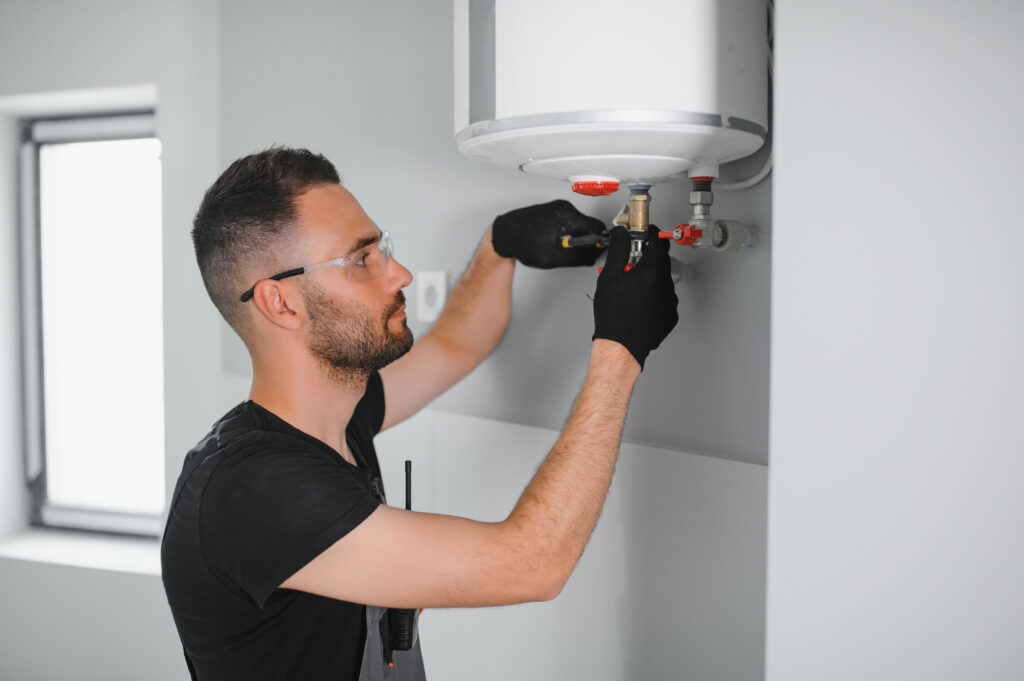
Water Heater Installation in CO
First and foremost, you’re going to pay almost about two times, 2 and 1 half times, the amount for a tankless water heater.
With a tankless water heater, water quality is a serious issue, and the reason is that all of the water that goes through your house, at least on the hot side, has to run through this tiny little pipe. You have a series of pipes: the heat basically comes in, goes up through, in a reverse radiator, and causes the water to get hot.
Here’s the issue: in the southern states, water is coming from the north. It travels through the dirt, picks up calcium and magnesium. When it is heated, it separates itself inside the heat exchanger, so it leaves behind the minerals, and they stick to the inside of the pipe.
If you’ve ever seen minerals that build up on a faucet or anywhere else, the same applies to pinhole leaks; it starts to etch its way into the steel. Over time, the minerals build up. As they do, they insulate the pipes, and then the burner has to go on higher and higher to compensate for that insulation factor inside the pipe. Very similar to a heart attack.
This is the major downside with installing a tankless: water quality, especially in southern states, such as Texas, Arizona, and California. If you live in the North, like say San Francisco, water’s pretty good. Wouldn’t bother with a softener. But in the southern states, the southern part of the state, you must have a softener.
Why a Water Softener Is a Must
If you don’t, what happens is: all these pipes and all the valves, there are a lot of sensors, there are turbines that are sensing flow. They get caked up, and when they do, they cause chaos. They stop working properly. These were really not designed for hard water, and so when you pump hard water through them, it clogs them up, causes issues, and error codes.
That is the biggest downside: you really do need a water softener. You don’t need to buy a commercial product; just get anything. Anything’s better than nothing, but if you don’t, you’ll have a problem.
The Hot Water Delay Without Recirculation
The other thing is, if you get a model that does not have recirculation, here’s something to consider: the water starts, it has to go through all of the pipes, it has to sense the water’s going on, and then it starts heating. It has to start, go through the whole system, and then come out. There’s about a delay.
How is this taking longer? Thought it was instant. It’s not instant. The reason why: it’s got to pump the water through the turbine, let it know it’s on, it’s got to turn the gas on, and then it starts heating. Plus, the water has to travel all the way through the heat exchanger and back out. That’s a huge downside.
You can eliminate that by getting a recirculation pump, which is key. Highly suggest you get one. But then, if you’re moving water through the heat exchanger constantly, you have to have a water softener. If you don’t, it’s going to kick up the heat exchanger and you’re going to have problems. Overall: two to two and a half times the cost and a lot more maintenance.
The Vinegar Flush Problem
Other people: no, no, not getting a water softener, going to do the vinegar flush. Here’s the issue: when you put acid on metal, it slowly etches away. Also, if you’re the guy who either inherited a tankless or you just neglected it for a long time, probably don’t do anything with it, just leave it alone.
The reason why: as soon as the minerals are in, they’ve started to eat into the metal. When you pull them away, now you have even less metal to work with, and you’re putting acid in it, which slightly does away with metal. People: Going to do the flush ourselves? That’s good and all, but you’re building it up, then you’re removing it, building it up, removing it. Every time you do that, you’re thinning out the metal slowly.
Tankless vs. Tank: Which to Choose
If you’re willing to get a softener: tankless, all day, every day, with recirculation. If you don’t, you’re going to notice a little bit of a lag, and that’s annoying. If you have the money and you want to save costs on fuel, go tankless all the way. If you don’t really care: want hot water, tank.
Frequently Asked Questions
How much more does a tankless water heater cost?
Almost two times, 2 and 1 half times, the amount for a tankless water heater. Overall: two to two and a half times the cost and a lot more maintenance.
Does a tankless water heater need a water softener?
You really do need a water softener. You don’t need to buy a commercial product, just get anything. Anything’s better than nothing, but if you don’t, you’ll have a problem.
Is tankless hot water instant?
It’s not instant. It’s got to pump the water through the turbine, let it know it’s on, it’s got to turn the gas on, and then it starts heating.
How much maintenance does a tank water heater need?
They’re pretty basic; there’s really nothing to do. You do a flush once a year, you change the anode every three years, and you’re good.
Is a vinegar flush safe for a tankless water heater?
When you put acid on metal, it slowly etches away. Every time you do that, you’re thinning out the metal slowly.
Conclusion
Overall, two to two and a half times the cost and requires a lot more maintenance. If you’re willing to get a softener: tankless, all day, every day, with recirculation. If you have the money and you want to save costs on fuel, go tankless all the way.
If you don’t really care: want hot water, tank. With a tank, they generally just work until they leak and then you replace it, and that’s it.


