
Say it’s the second week of January in Woodland Park. It’s five below outside, the kids are asleep upstairs, and the baseboard heat that’s been ticking along all winter just goes quiet.
You head down to the mechanical room and stare at a boiler that’s been in the house since before you bought it. Whoever comes out tomorrow is going to ask you the same question you’re already asking yourself: do you fix it or replace it?
Repair usually makes sense when the boiler’s still relatively young, the problem is one part, like a pump, a valve, or a control, and it’s been reliable up to now. Replacement starts winning when the boiler is getting up there in years, when it’s breaking down more and more often, when there’s a serious leak or a problem with the heat exchanger, or when it’s an old, inefficient unit that’s costing you every month just to run.
Up here at over 8,000 feet, there’s one more wrinkle. Altitude changes how gas boilers perform, so whatever you choose has to be set up for it.
Repair or replace: a quick gut check
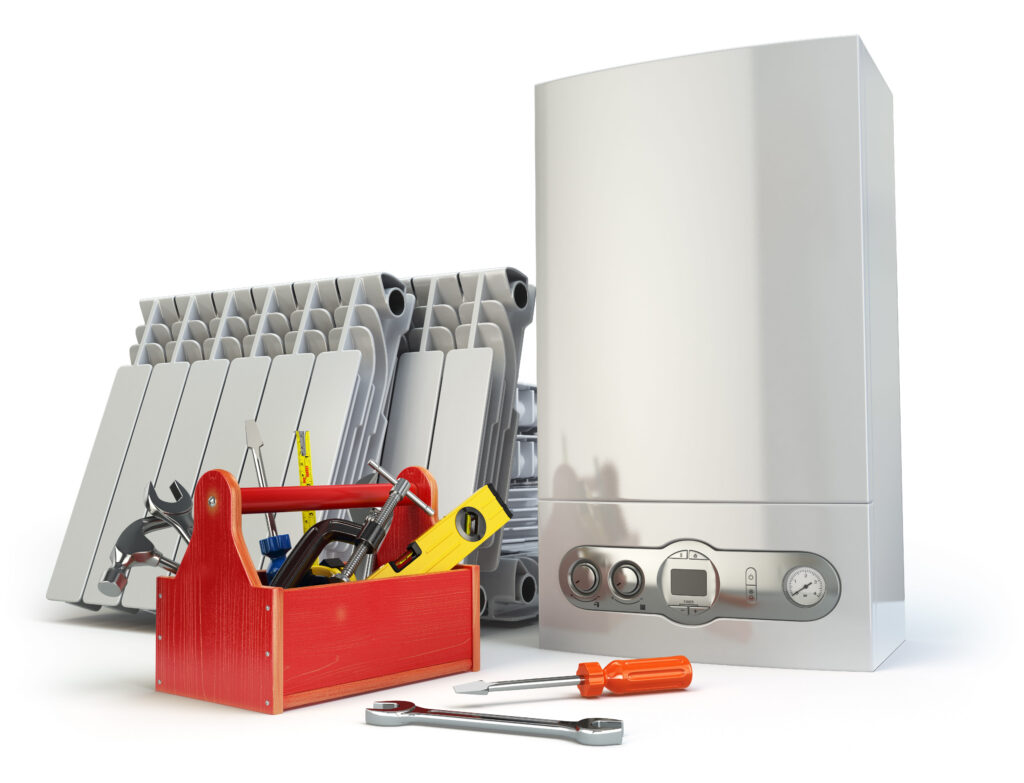
Boiler Repair vs Replacement Woodland Park, CO
| What’s going on | Leaning |
| Boiler is fairly young, one part failed | Repair |
| First real problem in years | Repair |
| Repairs are piling up every winter | Replace |
| Leaking from the boiler itself, or heat exchanger trouble | Usually replace |
| Old, low-efficiency unit with a standing pilot | Replace |
| Sized wrong for the house | Replace |
How old is too old?
There isn’t a hard cutoff, and boilers vary a lot. As a rough guide, many residential boilers last somewhere around 10 to 15 years, and some well-kept units keep going a good deal longer. So age alone isn’t a reason to replace a boiler that’s running fine. Age plus a big repair bill is a different conversation, though. Putting serious money into a 20-year-old boiler can mean paying to fix it now and paying to replace it soon anyway.
If yours is on the younger side, regular service is what keeps it there. Our posts How To Maintain And Extend The Lifespan Of Your Boiler and Boiler Maintenance Schedule: When Colorado Homes Need Service? cover what that looks like.
What’s your old boiler costing you to run?
This is the part people tend to forget when they’re staring at a repair estimate. Boiler efficiency is measured as AFUE, which is how much of the fuel you buy actually turns into heat over a typical year. According to the U.S. Department of Energy, older, low-efficiency systems run somewhere around 56% to 70% AFUE, and they usually have a natural draft and a pilot light that burns all the time. Mid-efficiency units come in around 80% to 83%. High-efficiency condensing boilers reach 90% to 98.5%, because they pull extra heat out of the flue gases with a second heat exchanger.
Put those side by side. A boiler running at 60% sends roughly 40 cents of every fuel dollar up the flue. A 95% condensing boiler sends about five. Over a Teller County winter, that gap adds up, and it’s worth weighing against what a repair would cost.
Why does altitude matter for a boiler?
Thinner air. Gas burners need oxygen, and there’s less of it up here, so boilers are derated, meaning their gas input is turned down to burn properly. A high-altitude addendum from boiler maker Weil-McLain spells out the standard rule under the National Fuel Gas Code: in the U.S., input is derated 4% for each 1,000 feet above sea level beyond 2,000 feet.
Run that for Woodland Park, which sits at about 8,481 feet. That’s roughly 6,500 feet above the 2,000-foot mark, or close to a 26% reduction in input. That has two practical effects. A new boiler has to be sized with altitude in mind, or it may come up short on the coldest nights. And it has to be set up for your elevation by a qualified installer, following the manufacturer’s high-altitude instructions. It’s not a plug-and-play swap.
When is repair the smart move?
When the boiler’s basically sound. A failed circulator pump, a bad zone valve, a faulty thermostat or a worn pressure-relief valve are all parts that can be replaced without touching the boiler itself. If the unit is still reasonably efficient and hasn’t given you much trouble, fixing it is usually the sensible call.
The Department of Energy makes a similar point. Retrofits and repairs can make sense for older systems that are otherwise sound, as long as you compare the cost with a new unit, especially if you were planning to replace soon anyway.
When should you lean toward replacing it?
When it’s old, worn out, inefficient or oversized. That’s the DOE’s list, and those are the situations where it calls replacement with a modern high-efficiency model the simplest option. Water leaking from the boiler itself is a big warning sign, as is corrosion on the heat exchanger, and so is a unit that needs a service call every few weeks all winter.
Before you size a new one, look at the house too. The DOE suggests improving insulation or windows first, because a tighter house can often get by with a smaller boiler. A good installer should size it to your home, not just match the old nameplate.
Safety first, decision second
If a carbon monoxide alarm goes off, or you smell gas, don’t troubleshoot. Get everyone outside and call for help from there. Repair-or-replace can wait until the house is safe.
And if the heat’s simply out on a frigid night, keep an eye on your pipes while you wait for service. How to Avoid Getting Pipes Frozen in Colorado Winters has tips that help in a pinch.
Frequently asked questions
How long does a residential boiler usually last?
Many last around 10 to 15 years, and well-maintained units can go longer.
What AFUE should a new boiler have?
High-efficiency condensing boilers reach about 90% to 98.5% AFUE, according to the U.S. Department of Energy. Older systems often run 56% to 70%.
Does altitude affect boiler performance in Woodland Park?
Yes. Gas input is typically derated 4% for every 1,000 feet above 2,000 feet, which is close to 26% at Woodland Park’s elevation.
Should I repair or replace a leaking boiler?
A leak from a valve or fitting can often be repaired. A leak from the boiler itself or a damaged heat exchanger usually points toward replacement.
Weighing repair against replacement? Bear Creek Plumbing is owner-operated by master plumber Scott Swistock, who brings over 40 years of experience to homes across Woodland Park, Divide, Florissant, Cripple Creek and Teller County. Estimates are free, with military and senior discounts. Call 719-271-9617, see our Boilers and Plumbing Repairs services, read our Testimonials, or contact us.


